An art school grad in the age of AI
I had an unconventional partnership recently: a client I’ve worked with – an organization in the education sector – reached out to see if I would be willing to mentor one of their students, Amani, a first-generation college student in art school.
In writing up the story, Real-world design starts with mentorship, I contacted Amani one year later to follow up on our collaboration and see how she was doing.The answer was sobering.
An articulate and gifted artist, she had not been able to find a long-term creative job post-graduation. When I casually remarked that “being a creative in the age of AI is so hard” – when tech tools instantly generate imagery with the click of a button, making AI-generated art ubiquitous; and the models are trained on real artists’ work – I was not prepared for her wise and thoughtful responses.
For the art world, it’s impeding upon people’s ability to get hired and enjoy art in general. You can’t take a finished piece at face value anymore— a tragedy, really.” – Amani Chandradatt
AI and the creative process
One of the things that inspired me most about our project together was her intention and creative process: from initial rationale, to sketch, to computer, revisions, then the final designs – something AI can’t do.
Amani notes, “AI can’t (yet) comprehensively explain its process. Even with advancements, it wouldn’t understand the value in collaboration, or why each step is necessary other than regurgitating words stolen from forums, published texts, and websites.”
Further, “the market is indiscriminate and corporations won’t hesitate to save money even if the product is ultimately meager – soulless. Last holiday season had retail stores chock-full of generative AI – especially for Christmas. I doubted every product’s authenticity because AI plays heavily into kitsch aesthetics.”
I’ve seen them, you’ve seen them, I’ve even guilty of creating a few of them when the tools became widely available. Now I look at these images more critically and wonder if other viewers are, too?
A return to museums, libraries, and nature
What does this mean for visual communicators, and consumers of visuals (in other words, all of us)? Amani has some hope:
1) The normalization of AI has only increased fatigue for the tool…[with] a swamp of generated images, people return to institutions such as libraries and/or museums… and learn from the abundance of information acquired all throughout human history.
2) Many creatives in an ever-expanding digital landscape polluted with soulless imagery will gather a newfound interest in studying from life… AI only provides an approximation of reality. It never, ever will understand the minutiae that a human could observe in nature. Thus, artists… will pay close attention to the accuracy, and seek inspiration from the natural world once more.
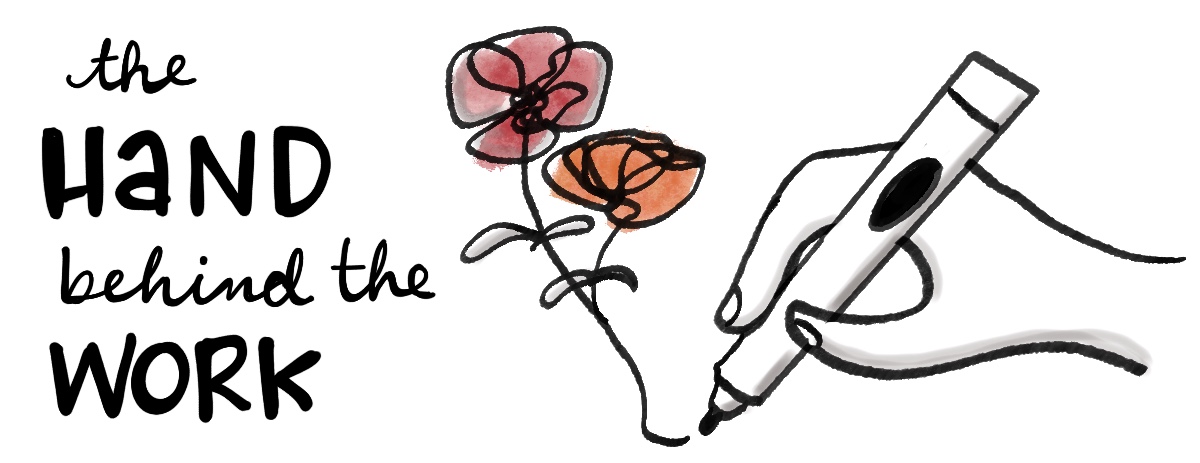
3) Generative AI produces images with an uncanny sheen over everything. The ‘rendering’ is always smooth with little blemishes whatsoever. I believe this encourages artists to become experimental and further develop their own voice. Imperfections are to be embraced as they’re indicative of the human touch that makes art special. One of my mentors suggested how viewers should be reminded of the hand behind the work.”
Are we collectively willing to trade authenticity for efficiency? On an individual level, has the “uncanny sheen” of AI left you yearning for something more tactile and real? Has the pendulum yet swung back in favor of human creativity, or is the AI bubble growing larger? How has your eye for art changed in the age of AI? I’d love to hear your thoughts.
Need a hand with a creative project?
Amani is available for illustration, graphic design, 3D modeling and video game development. Visit her portfolio.
And there’s always a real person behind the work at Stone Soup Creative. If you’re ready to turn your ideas into visuals with impact (and embrace imperfection), I’d love to help.
Give me a call at 212-721-9764 or reach out on my contact form.